

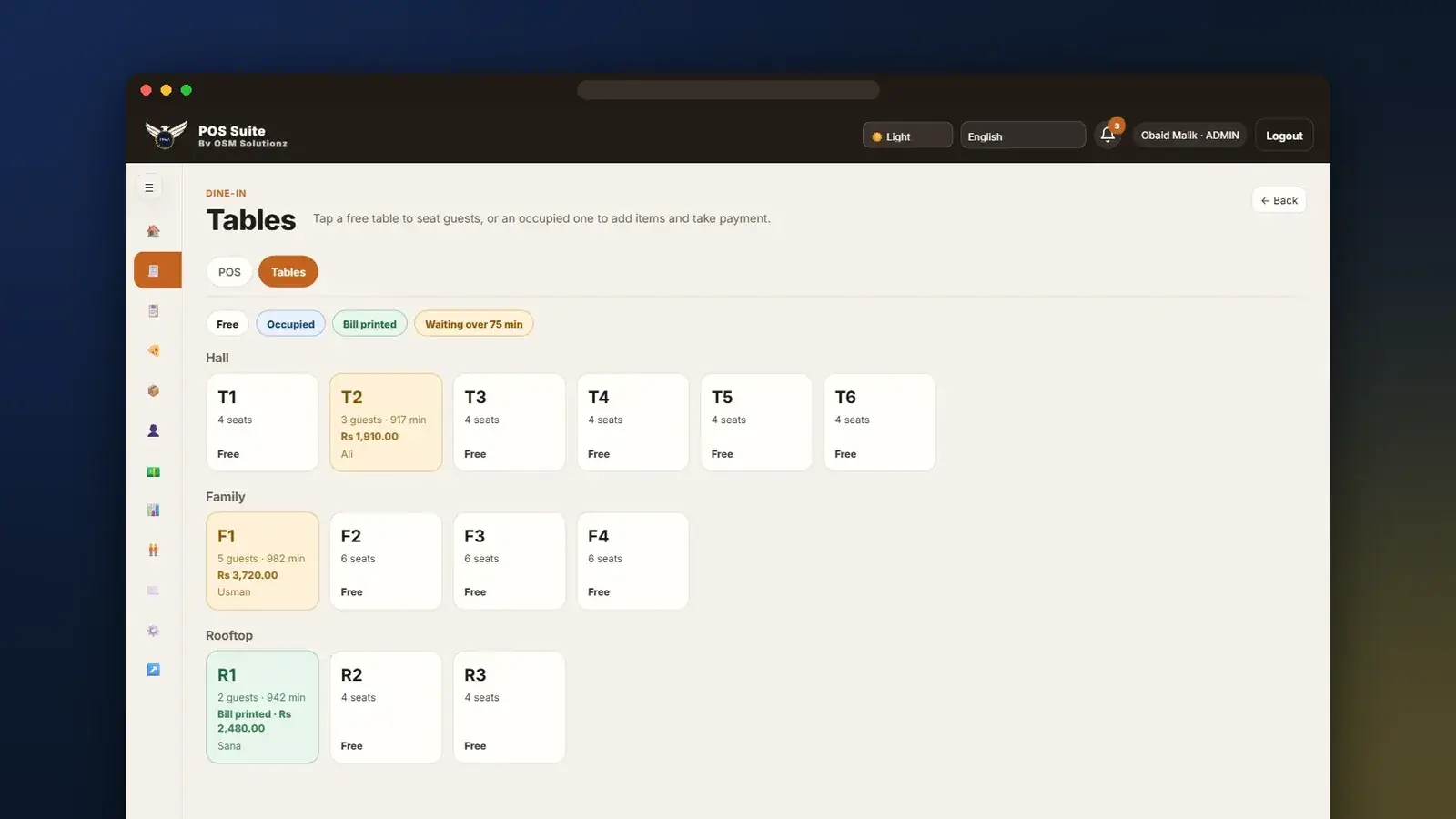
Choosing restaurant POS software in Pakistan is one of the biggest decisions a restaurant owner makes. The right system speeds up the counter, stops cash leaks, keeps tax records clean and tells you which dishes actually make money. The wrong one freezes during load-shedding, confuses your staff and costs you every month.
This guide is a plain-English checklist. It’s written for owners of fast-food shops, cafes, dhabas and family restaurants who want to compare systems properly before they buy.
What a Restaurant POS System Actually Does
A restaurant POS (point of sale) system is more than a billing machine. A good one handles:
- Counter billing: fast orders, discounts, split bills and printed receipts.
- Kitchen orders: sending each order to the kitchen so nothing is forgotten.
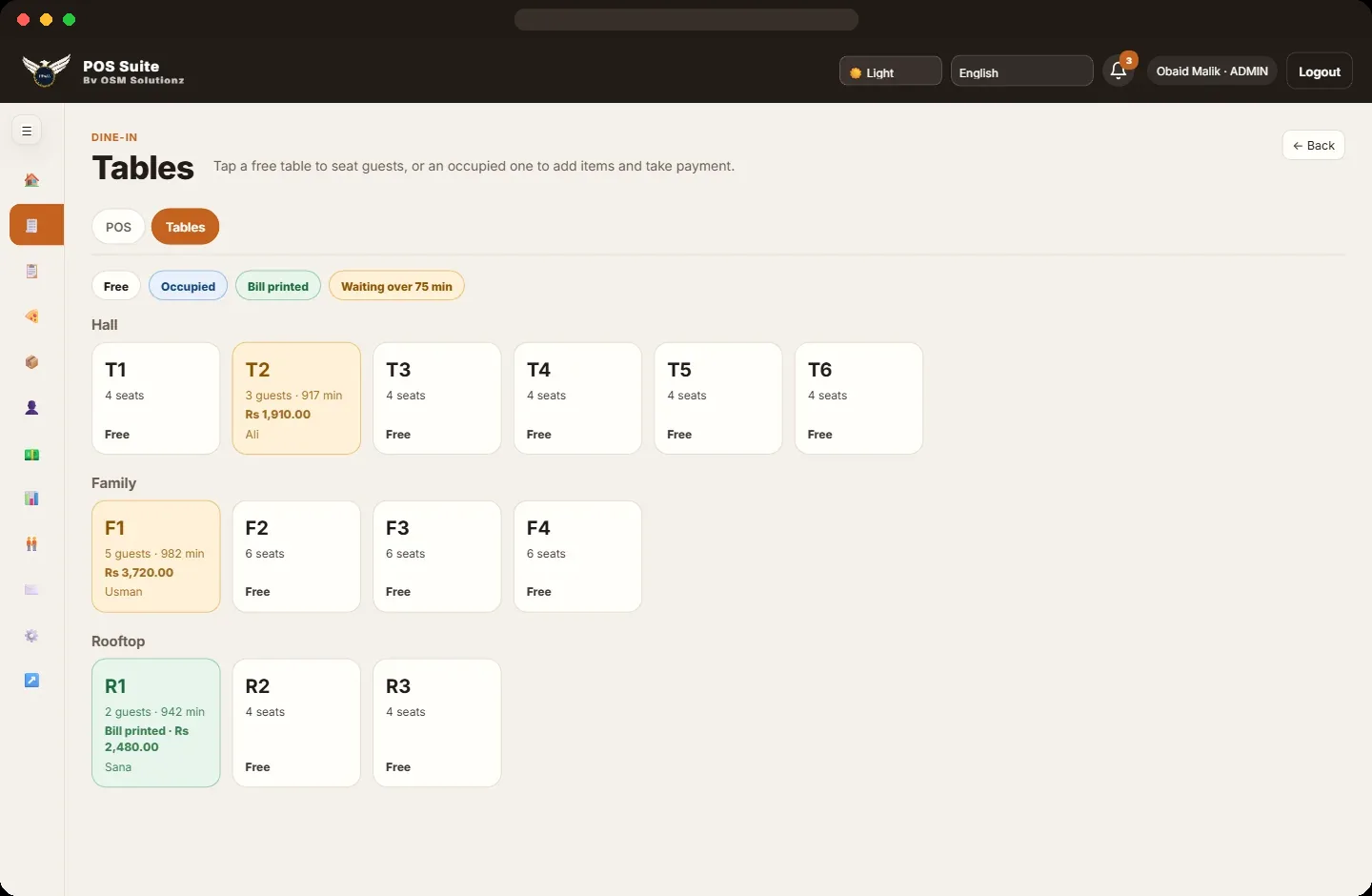
- Dine-in tables: seeing which tables are free, occupied or waiting for the bill.
- Online and WhatsApp orders: taking orders from your own website, not only from delivery apps.
- Stock and purchasing: knowing what’s running low before it runs out.
- Reports: daily sales, best and worst sellers, and staff activity.
If a system only prints bills, it’s a cash register, not a restaurant POS.
1. It Must Work When the Internet Doesn’t
In Pakistan, internet drops and load-shedding are part of daily life. A cloud-only POS that stops billing when the connection drops is a serious risk on a busy Friday night.
Ask every vendor: “If the internet goes down for an hour, can my counter keep billing?” The answer you want is yes, with the sales syncing automatically once the connection comes back. An offline POS that runs on the counter PC is the safest choice for most Pakistani restaurants.
2. Tables, Takeaway and Delivery in One Place
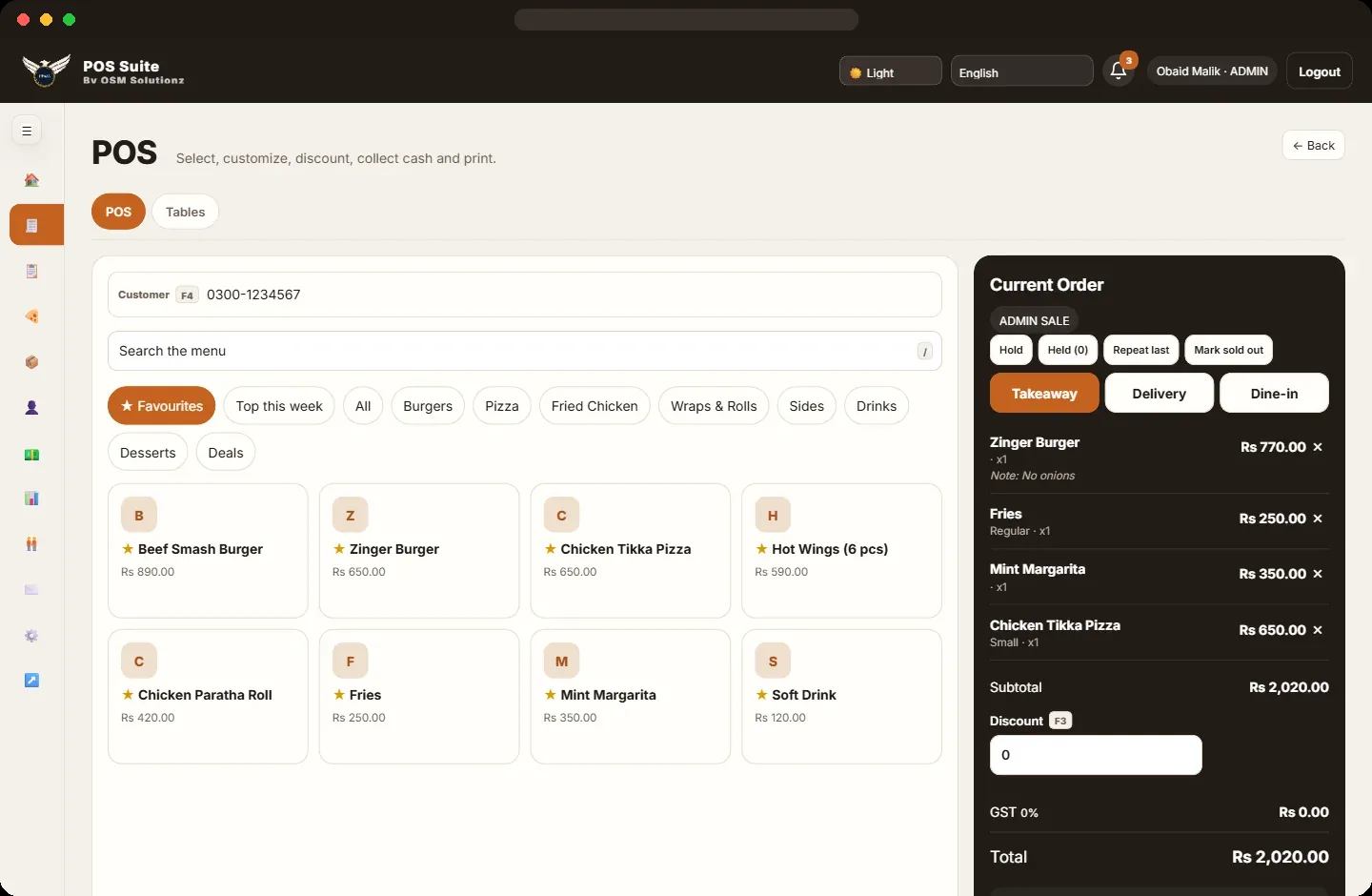
Most restaurants run three kinds of orders at once: dine-in, takeaway and delivery. Check that the system shows all three on one screen, and that dine-in has a proper table view (free, occupied, bill printed). Juggling separate tools for each order type is where mistakes and missed orders happen.
3. Your Own Online Ordering Website (and WhatsApp)
Delivery apps bring customers, but they take a commission on every order. A restaurant POS that includes your own ordering website lets regular customers order from you directly, and the orders land straight in your POS.
WhatsApp is how many Pakistani customers already order. Look for a system that accepts WhatsApp orders without anyone having to retype them. You can see how this works on our live demo ordering website.
4. Screens Your Staff Can Read: Urdu, English and More
Your cashier and kitchen staff need to understand the screens quickly. A POS in English only slows down new staff and causes mistakes. Check that the system offers Urdu (and Arabic if you also serve Gulf customers or plan to expand there), and that switching language is simple.
5. Owner Controls That Stop Leakage
Cash leakage is one of the biggest hidden costs in a restaurant. Good restaurant POS software lets the owner:
- Decide what each staff member is allowed to do (discounts, voids, refunds).
- See every cancelled or edited bill.
- Check the day’s sales from a phone, even when away from the shop.
If a vendor can’t show you these controls in a demo, keep looking.
6. Reports That Tell You What to Change
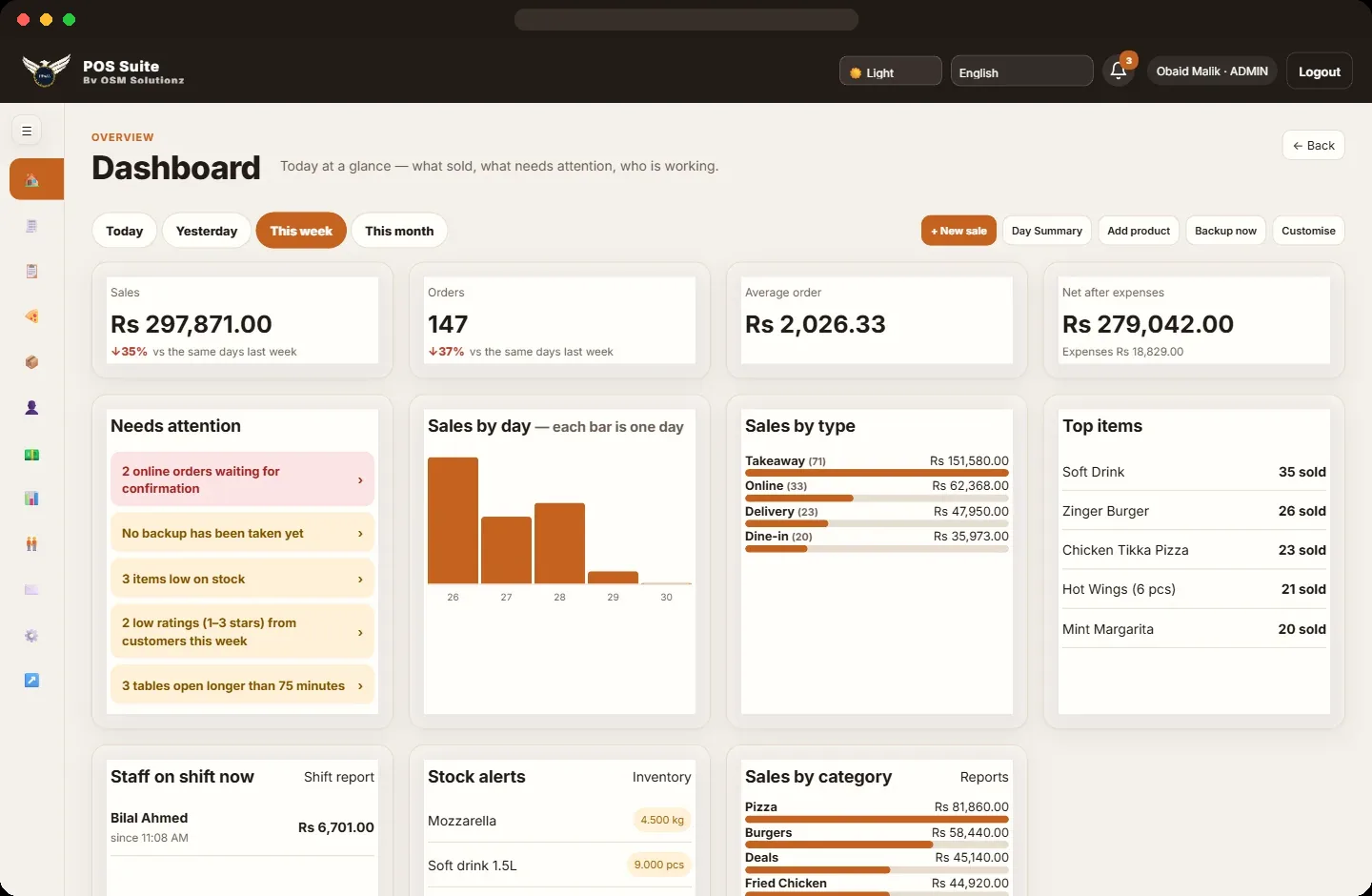
The real value of a POS is in its reports. Beyond daily sales totals, look for:
- Menu performance: which items sell a lot and make good profit, and which ones you should rethink. (We explain the Stars, Workhorses, Puzzles and Dogs method in our article on restaurant POS features.)
- Low-stock lists: a purchase list grouped by supplier, ready to send.
- Busy hours: so you can plan staff for rush times.
7. Tax Rules: FBR and Provincial Authorities
The Federal Board of Revenue (FBR) requires many restaurants in Pakistan to integrate their POS with its system, and air-conditioned restaurants are among the businesses named. Provincial revenue authorities, such as SRB in Sindh and PRA in Punjab, have their own POS integration rules, and the rules have kept changing in 2026.
What this means for you:
- Ask your tax advisor which rules apply to your restaurant.
- Ask each POS vendor exactly which authorities their system is integrated with today, not “soon”.
- Choose a system that keeps clean, complete digital records either way, because that makes integration and audits much easier.
About POS Suite: FBR and ZATCA e-invoicing integration is coming soon. Contact us to be told first.
8. What Does Restaurant POS Software Cost in Pakistan?
Prices vary a lot. Industry guides put cloud POS subscriptions at roughly PKR 5,000 to 50,000 a month, and complete on-premise setups with hardware at PKR 200,000 to 500,000 or more. What changes the price:
- Setup type: a single offline counter PC, or a hosted system with an online ordering website.
- Number of terminals: one counter, or several counters plus a kitchen screen.
- Hardware: whether you already have a PC, receipt printer and cash drawer.
- Support: who installs it, trains your staff and answers the phone at 11 pm.
Always ask for a free trial or demo in your own restaurant before paying.
A Quick Checklist to Take to Every Demo
- Does it keep billing with no internet?
- Does it handle dine-in tables, takeaway and delivery together?
- Can customers order from my own website and WhatsApp?
- Is it available in Urdu?
- Can I control and see what each staff member does?
- Does it show menu performance and low stock?
- Which tax authorities is it integrated with today?
- Is there a free trial, and who trains my staff?
How POS Suite Fits This Checklist
We built POS Suite around exactly these questions. It’s restaurant POS software for restaurants, cafes and fast-food shops in Pakistan and Saudi Arabia:
- An offline till that keeps billing during outages.
- Dine-in tables, takeaway and delivery on one screen.
- Your own online ordering website with WhatsApp orders (hosted version).
- 18 languages, including Urdu and Arabic.
- Staff permissions, an owner dashboard, menu performance reports and supplier purchase lists.
- A free trial and setup help.
Book a free demo and see it running with your own menu.
Frequently Asked Questions
What is the best restaurant POS software in Pakistan? The best system is the one that fits how your restaurant works. For most Pakistani restaurants, that means offline billing, table management, online and WhatsApp orders, Urdu screens and clear owner reports. Use the checklist above in every demo.
Can a restaurant POS work without internet? Yes, if it has an offline till. The counter keeps billing during outages and syncs when the connection returns. Cloud-only systems usually can’t do this.
How much does a restaurant POS cost in Pakistan? Industry guides report roughly PKR 5,000 to 50,000 a month for cloud subscriptions and PKR 200,000 to 500,000 or more for full on-premise setups with hardware. Your price depends on the setup, terminals, hardware and support.
Is FBR POS integration mandatory for restaurants? FBR requires many restaurants to integrate their POS, including air-conditioned restaurants, and provincial authorities have their own rules. Check with your tax advisor which apply to you.
Do I need a separate online ordering website? Not if your POS includes one. A built-in ordering website sends orders straight into the POS and avoids delivery-app commission on direct orders.